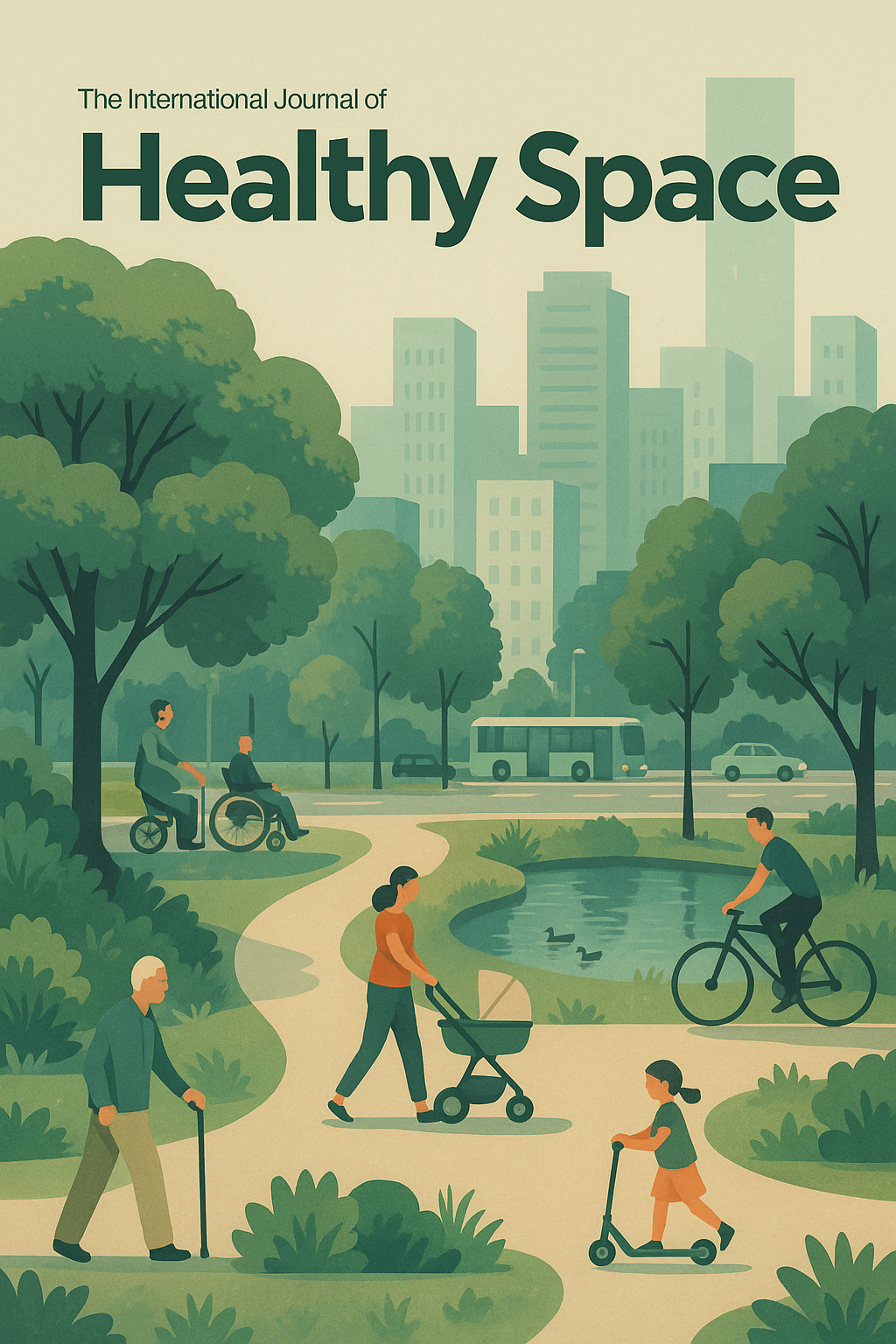
Healthy Spaces in Transition: From Global Context to Local Evidence and BIT-UoE Research Contributions
DOI:
10.67164/8pdwpn46Issue:
Vol. 1 No. 1 (2026): 2026 Issue 1Keywords:
Healthy space; Urban neighbourhood environment; Walking behaviour; Physical activity; Mental stressArticles
Downloads
How to Cite
Downloads
Abstract
In recent years, the relationship between the urban built environment and public health has attracted growing scholarly attention, yet most existing studies rely heavily on Western contexts. In China, pioneering studies from universities such as Tsinghua University and Tongji University have laid an important foundation for understanding healthy spaces in a local setting. Against this background, we —the Joint Laboratory of Healthy Space established by Prof. Simon Bell and Dr Ziwen Sun, a collaborative initiative between the University of Edinburgh (UoE) and the Beijing Institute of Technology (BIT)— conducted a series of theoretical and empirical studies examining how the built environment influences health and well-being in China. This article will introduce a series of our latest research findings from the past ten years in the following three key areas. First, we reconceptualise walkable spaces and walking behaviour in the context of low-tier Chinese cities, highlighting the different impacts of spatial form, cultural practices, and everyday lives. This provides new theoretical and methodological directions for health behaviour research. Secondly, we identify distinct mental restoration effects associated with specific neighbourhood environments, such as wild and artificial urban parks, as well as informal green spaces. Thirdly, we compare the differential mental health benefits provided by green spaces within enclosed neighbourhoods during the pandemic lockdown. We also reveal how high-density built environments significantly moderated COVID-19 transmission risks, providing insights for future emergencies. Together, these findings contribute context-specific evidence on the health implications of urban environments, expand the global comparative literature, and inform intervention strategies aligned with the Healthy China Initiative. The article, therefore, contributes to the scientific basis for healthier human settlements and advocates for design and policy adaptations that are responsive to local contexts.
Author Biography
Ziwen Sun
Ziwen Sun1,2, Zhiyue Zheng1,2, Peiling Zhou3
1
School of Design and Arts, Beijing Institute of Technology, Beijing, China
2
Joint Laboratory of Healthy Space between the University of Edinburgh and Beijing Institute of Technology, Beijing, China
3
Department of Urban Planning, Harbin Institute of Technology (Shenzhen), Shenzhen, China