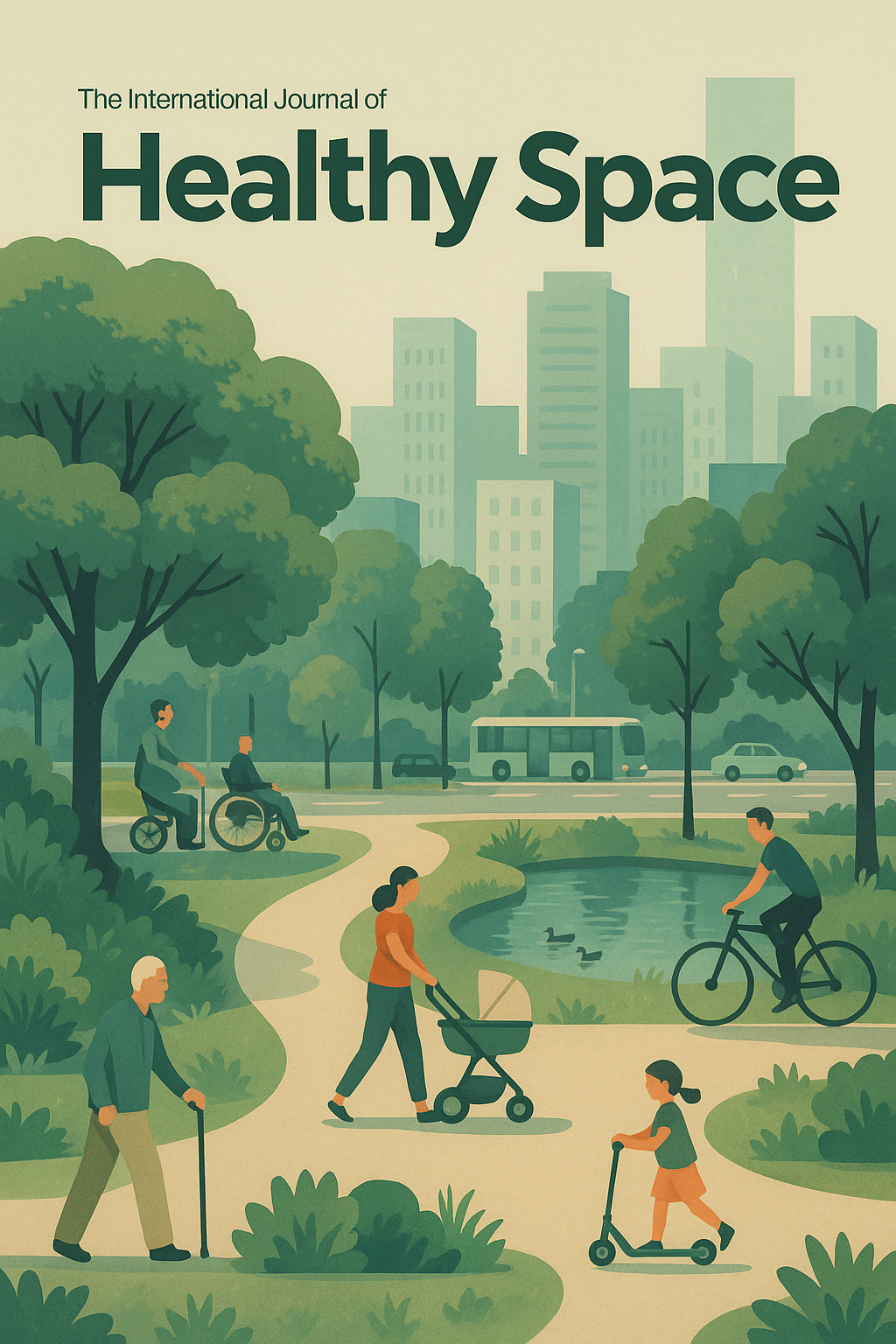
From Space to Place: A Review of Landscape Design and Children's Health Research
DOI:
10.67164/rn5pxj37Issue:
Vol. 1 No. 1 (2026): 2026 Issue 1Keywords:
landscape design; children’s health; environmental affordance; physical activity; place attachment; playground; child-friendly city; high-density cityArticles
Downloads
How to Cite
Downloads
Abstract
Against the backdrop of rapid urbanization and the “indoor, sedentary” lifestyle of children, the role of the built environment in promoting children’s health has garnered increasing attention. This review systematically synthesizes research advances in the field of landscape design and children’s health, aiming to provide an academic reference for child-friendly city initiatives and evidence-based design. The article elucidates core theories such as environmental behavior, environmental affordance, place attachment, and play classification, establishing the foundation for understanding the chain mechanisms of “physical environment → psychological perception → behavioral response → health outcomes.” At the scales of public open spaces, playgrounds, neighborhoods, and school routes, the review synthesizes the multidimensional impacts of landscape spaces on children’s physical activity, cognitive development, and socio-emotional well-being. Methodologically, the review explores the converging trend of diverse techniques, including objective measurements (accelerometers, GPS, computer vision), systematic behavioral observations (SOPARC, behavioral mapping), subjective perception and participatory methods (perceptual mapping, photovoice, walking interviews), and spatial analysis. Current research remains limited, with a stronger emphasis on physiological indicators over psychological development, a predominance of cross-sectional designs, the lack of focus on children’s own perspectives, and insufficient exploration of the underlying mechanisms within China’s high-density urban contexts. Future research should develop interdisciplinary performance evaluation frameworks, extend to higher-order benefits such as cognition, emotion, and environmental ethics, promote participatory action research paradigms, and bridge the gap between policy and design through longitudinal studies and indigenous theoretical innovation, thereby translating “child-friendliness” into high-quality spatial realities.
Author Biography
Xili Han
Xili Han ,
School of Urban Planning and Design, Peking University Shenzhen Graduate School School of Architecture and Landscape Architecture, Peking University