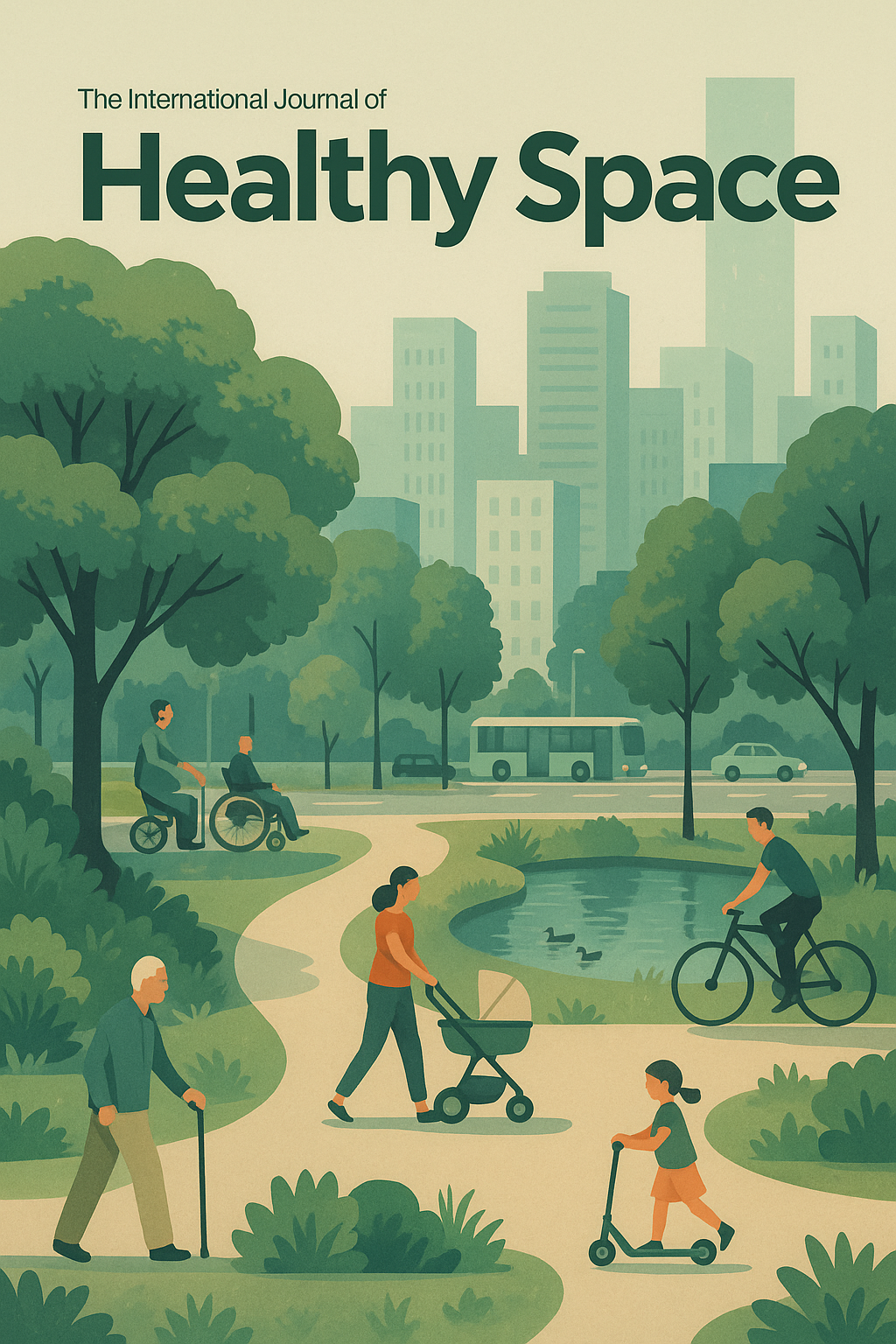
The Benefits of Urban Blue Spaces for Physical Activity and Mental Health: A Cultural Ecosystem Services Perspective
DOI:
10.67164/b12fwz87Issue:
Vol. 1 No. 1 (2026): 2026 Issue 1Keywords:
Blue spaces; Physical activity; Mental health; Human–water interaction; Evidence-based designArticles
Downloads
How to Cite
Downloads
Abstract
Urban mental health challenges are increasingly prominent, and developing blue spaces that promote physical activities (PA) has become an important approach in urban health planning. However, existing studies are limited by simplified indicators and insufficient understanding of mechanisms, with particularly insufficient attention to the role of PA. From a cultural ecosystem services (CES) perspective, this study proposes an integrated framework linking blue spaces, PA, and mental health, examines the differential roles of PA across distinct research pathways, and introduces a “human-water interaction” (HWI) indicator operationalizing both PA intensity and degree of water contact. Synthesizing current evidence on blue space–mental health research, we identify three priority directions: (1) elucidating the intrinsic mechanisms underlying blue space health benefits; (2) developing HWI-based blue prescriptions; and (3) advancing evidence-based blue space design guided by health outcomes. This review delineates theoretical linkages and frontier advances connecting blue spaces, physical activity, and mental health, offering actionable insights to inform healthy urban planning and design.
Author Biography
Shuhan Shia , Yingze Taoa , Dihua Lib,*
Shuhan Shia, Yingze Taoa, Dihua Lib,*
a Beijing Sport University, The School of Leisure Sports and Tourism, Beijing100084, China
b Peking University, College of Architecture and Landscape, Beijing100871, China
* Corresponding author, e-mail address: dihuali@pku.edu.cn